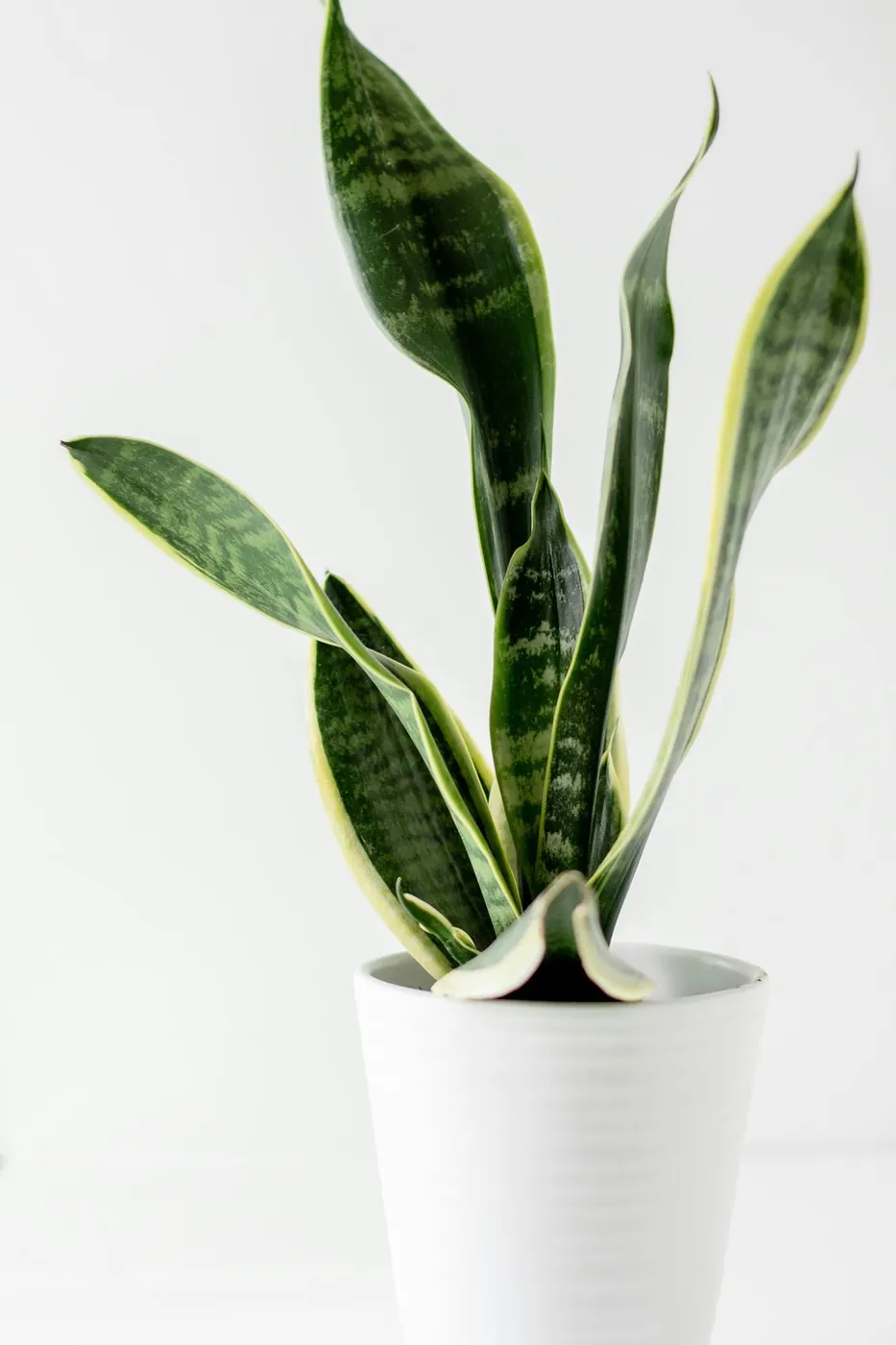
Snake plant propagates differently from vining plants like pothos and monstera, which need a stem node. Snake plant doesn't have nodes in the same sense, but it propagates readily two other ways: leaf cuttings, or dividing the rhizome the plant grows from. Which one to use depends mostly on one detail: whether your plant is variegated.
The detail that decides your method
Many popular snake plant varieties, including 'Laurentii' with its yellow leaf margins, are variegated. Variegation isn't stable through leaf-cutting propagation. A leaf cutting from a variegated plant reliably grows into a plain green plant, since the new growth doesn't inherit the parent leaf's coloring the way it would from division. If keeping the exact look of a variegated plant matters, division is the only reliable method. Leaf cuttings are perfectly fine if you don't mind ending up with solid green offspring, or if your plant is a solid green variety to begin with.
Method 1: leaf cuttings
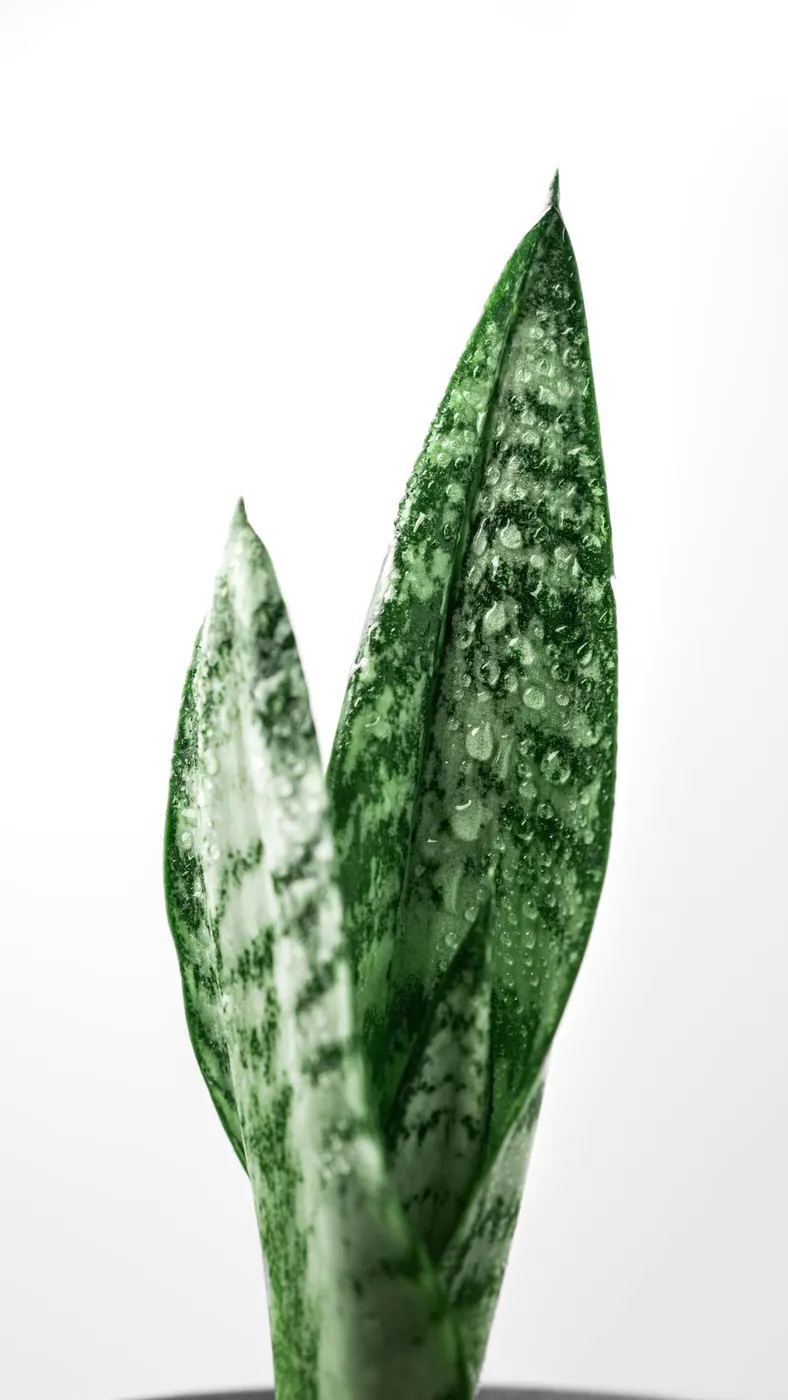
Photo by Sayan Majhi on Unsplash
- Cut a healthy leaf near the base, close to the soil line, using clean, sharp scissors or a knife.
- Let the cut end dry and callus for 2 to 5 days before planting. This callused, dry surface resists rot far better than a fresh, wet cut placed directly in soil or water.
- Optional: cut the leaf into smaller sections, each a couple of inches long, to get more cuttings from a single leaf. If doing this, keep track of which end was originally closest to the base. Sections planted upside down generally won't root.
- Root in water or soil. In water, submerge the bottom portion, change the water weekly, and expect roots in several weeks to a couple of months, this is a genuinely slow method compared to something like pothos. In soil, plant the callused end an inch or two deep in a well-draining mix; no rooting hormone is needed.
- Be patient. A University of Florida horticulture reference lists 4 to 6 weeks to rooting for snake plant leaf cuttings, and water propagation in particular is often slower still. This is one of the more patience-testing common houseplants to propagate.
Method 2: division
Snake plant grows from an underground rhizome, and mature plants often produce "pups", new small shoots connected to the main plant by that rhizome. Division separates these pups (or simply splits a crowded clump) into independent plants that already have their own roots attached, which tends to establish faster than a leaf cutting starting from zero.
- Remove the plant from its pot and gently brush away soil to expose the rhizome connecting the sections.
- Identify a natural division point, ideally where a pup already has a few leaves of its own and some visible roots.
- Cut through the rhizome with a clean, sharp blade, separating the section you want to divide off.
- Pot each division separately in well-draining soil, at roughly the same depth it was growing before.
Aftercare for either method
Whichever method you use, hold off on heavy watering right after propagating. Snake plant is very prone to rot at this stage if kept too wet. Let the top of the soil dry out between waterings, more so than you would for an established plant. Bright, indirect light supports faster rooting; direct sun can scorch a cutting that doesn't yet have the root system to support itself well.