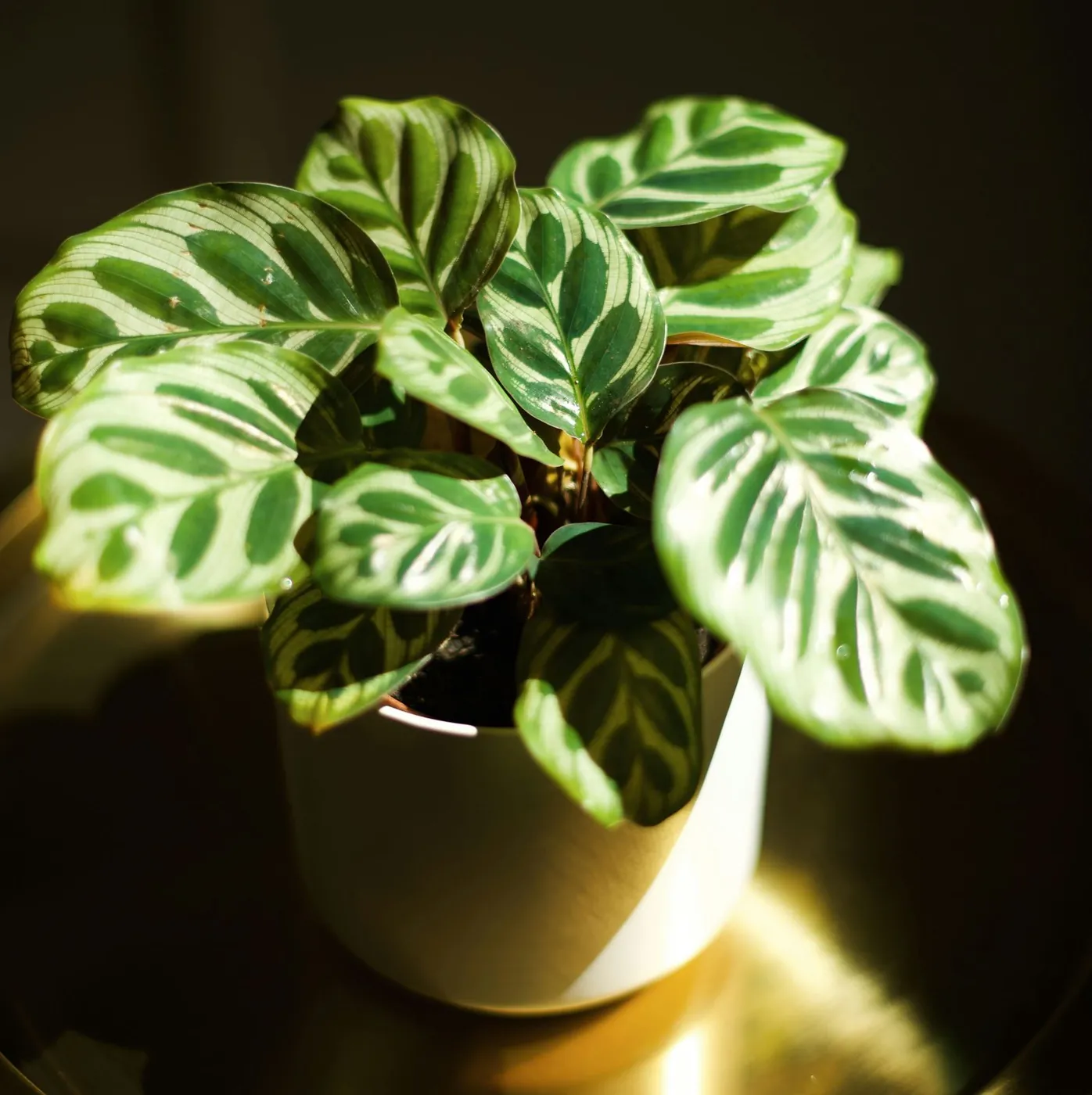
Humidity is one of the least visible factors in houseplant care, which is exactly why it gets ignored until a plant's already showing damage. Unlike watering, there's no soil to check with a finger, the problem builds invisibly in the air itself.
What relative humidity actually means
Relative humidity is the amount of water vapor currently in the air, expressed as a percentage of the maximum the air could hold at that temperature before it condenses. Warmer air holds more moisture than cold air at the same relative humidity reading, which is part of why a heated room in winter can feel dry even when a humidity gauge shows a number that doesn't look alarming at a glance.
Most homes run drier than plants would like
Most houseplants, especially tropical ones that evolved in rainforest understories, do best somewhere between 40 and 60 percent relative humidity. Most homes run in that range or below it, and heating in particular is the biggest driver of a drop, extension research has found indoor humidity routinely falling below 30 percent in centrally heated homes during winter. That's a meaningful gap for a plant adapted to jungle-floor conditions.
Measure it, don't guess
A hygrometer, a small humidity-measuring gauge, is inexpensive and removes the guesswork entirely. A useful way to think about the reading: it's measuring how much water-stress your plants are currently under, not just a number for its own sake. Crispy brown leaf tips are one of the clearest visible signs that humidity has been too low for a while, since the thinnest, most exposed cells at the leaf margin lose moisture first; see our brown leaf tips guide for the full diagnostic picture, since low humidity is only one of several causes.
What actually raises humidity
- A humidifier run consistently near the plants, the most reliable and controllable method, especially in an enclosed or small room.
- Grouping plants together, since each one releases moisture through its leaves, and clustering several creates a small shared microclimate.
- Pebble trays, a shallow dish of water and pebbles under the pot (with the pot sitting above the waterline, not in it), which offer a modest but real boost.
- A bathroom with a window, if one's available, thanks to regular steam from showers, covered in more depth in our bathroom plants guide.
What doesn't work
Misting gets recommended constantly, and it's genuinely the weakest method here. It raises humidity for a few minutes at most before the water evaporates or drips off, and misting foliage that stays damp too long, especially on plants with dense, crowded leaves, can actually encourage fungal problems rather than solving the original issue. It's not harmful in moderation, it's just not a real substitute for a sustained method.
Sources
- University of New Hampshire Extension: How Can I Increase Humidity Indoors for My Houseplants?
- Healthy Houseplants: How to Measure Houseplant Humidity Levels
- Blooming Expert: Exact Humidity Targets for Every Plant Family
Frequently asked questions
Do all houseplants need the same humidity?
No. Succulents and cacti tolerate dry air well and can even suffer in overly humid conditions; thin-leafed tropical plants like calathea, ferns, and alocasia are the ones that genuinely need the higher end of the range.
Can humidity be too high?
Yes, sustained humidity well above 70 percent, especially with poor airflow, can encourage fungal issues and pests like fungus gnats. More isn't automatically better; matching the target range to the actual plants is what matters.