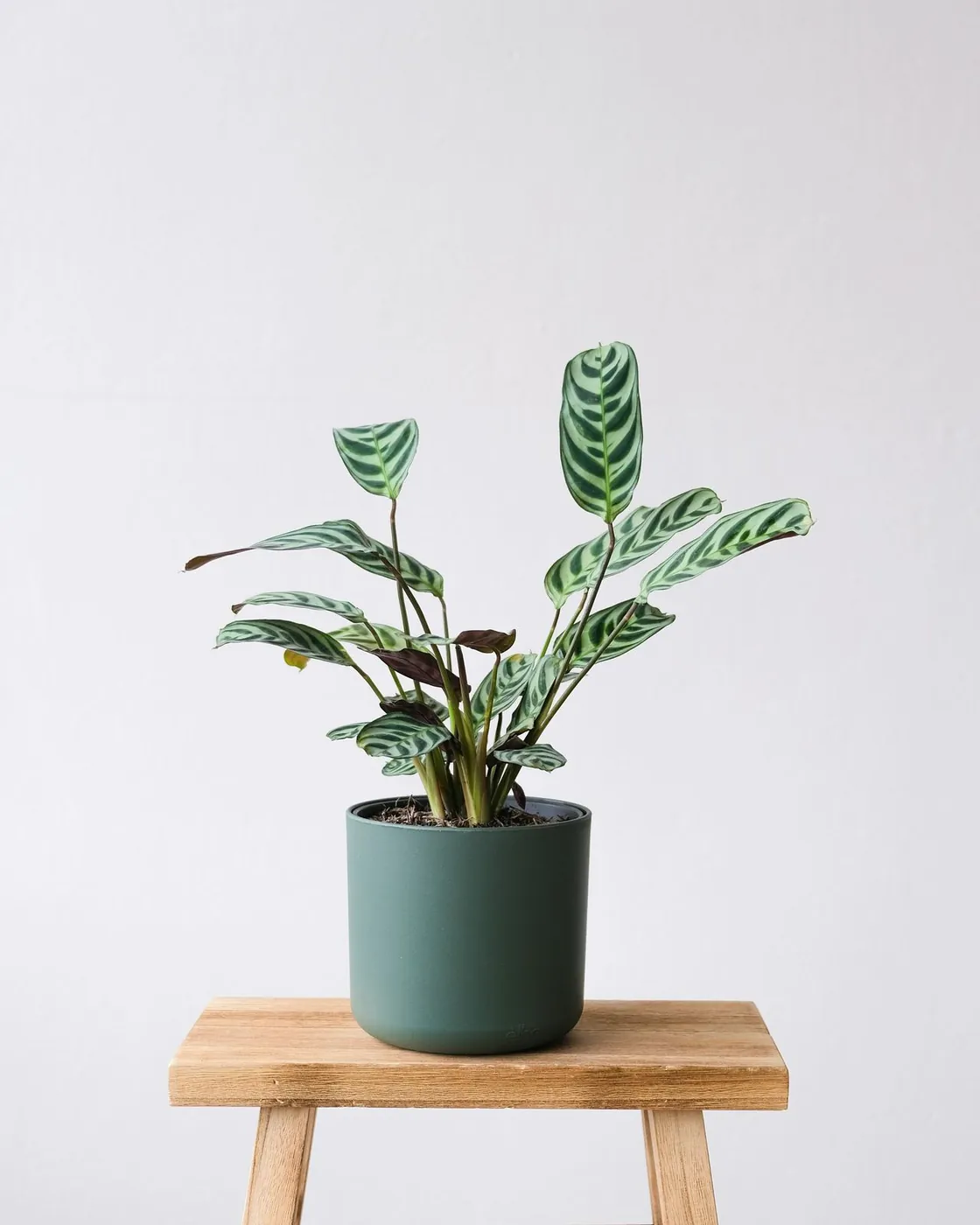
Curling is a leaf's way of shrinking its own surface area to slow down water loss, which is why nearly every cause of curling traces back to the plant losing water faster than it can replace it, or trying to prevent that from happening. The genuinely useful diagnostic detail is the direction of the curl. It narrows things down before you check anything else.
Read the direction first
- Curling upward or inward, dry and crispy: almost always underwatering or heat stress. The plant is reducing exposed surface area to conserve what water it has left.
- Curling downward, soft, sometimes with yellowing: points toward overwatering or root rot rather than a lack of water.
- Curling inward at the edges specifically, gradual over days: classic low humidity, especially on calathea, ferns, alocasia, anthurium, and maranta, the most humidity-sensitive common houseplants.
- Distorted, puckered, or twisted new growth: a pest signal rather than a watering or humidity issue, worth checking under the newest leaves before assuming anything else.
Underwatering and heat stress
Check the soil the same way you would for any watering issue: a finger a couple of inches in should tell you if it's actually dry. If it is, water thoroughly until it drains from the bottom. Curled leaves from simple underwatering typically begin to unfurl within a few hours of a good watering. If soil moisture is fine but the plant sits in intense direct sun or near a heat source, the curling is a heat response rather than a water shortage, moving it to bright but indirect light usually resolves it over the following days. See our watering guide for the underlying check either way.
Low humidity
Below roughly 30 to 40 percent relative humidity, thin-leafed tropical plants lose moisture through their leaves faster than they can pull it back up from the soil, and edge curling is often the first visible sign, sometimes before any browning shows up. This is especially common during winter heating season. A humidifier run consistently, a pebble tray, or grouping humidity-loving plants together all make a real, sustained difference; misting doesn't, since the effect fades within minutes. Our post on why leaf tips turn brown covers this same humidity mechanism in more depth, since the two symptoms often show up on the same sensitive plants.
Overwatering
Less intuitive, but real: waterlogged roots lose the ability to take up water properly, and a downward, softer curl alongside wet, heavy soil is the plant's response to that internal water shortage, even while sitting in plenty of moisture. Stop watering and check the roots rather than adding more. See our root rot guide if the roots turn out to be the actual problem.
Nutrient issues
Excess fertilizer salt buildup can damage leaf margins and cause curling alongside the crusty soil surface that usually accompanies overfeeding; a genuine nutrient deficiency, magnesium or manganese in particular, can also show up as curling, often paired with unusual leaf discoloration. See our fertilizing guide for how to feed correctly without tipping into either problem.
Pests
Distorted or twisted new growth specifically is a pattern worth checking under magnification, especially on the newest leaves and along leaf undersides. Thrips, aphids, and spider mites can all cause this kind of curling while the plant is actively expanding new tissue. See our pest identification guide to narrow down which one.