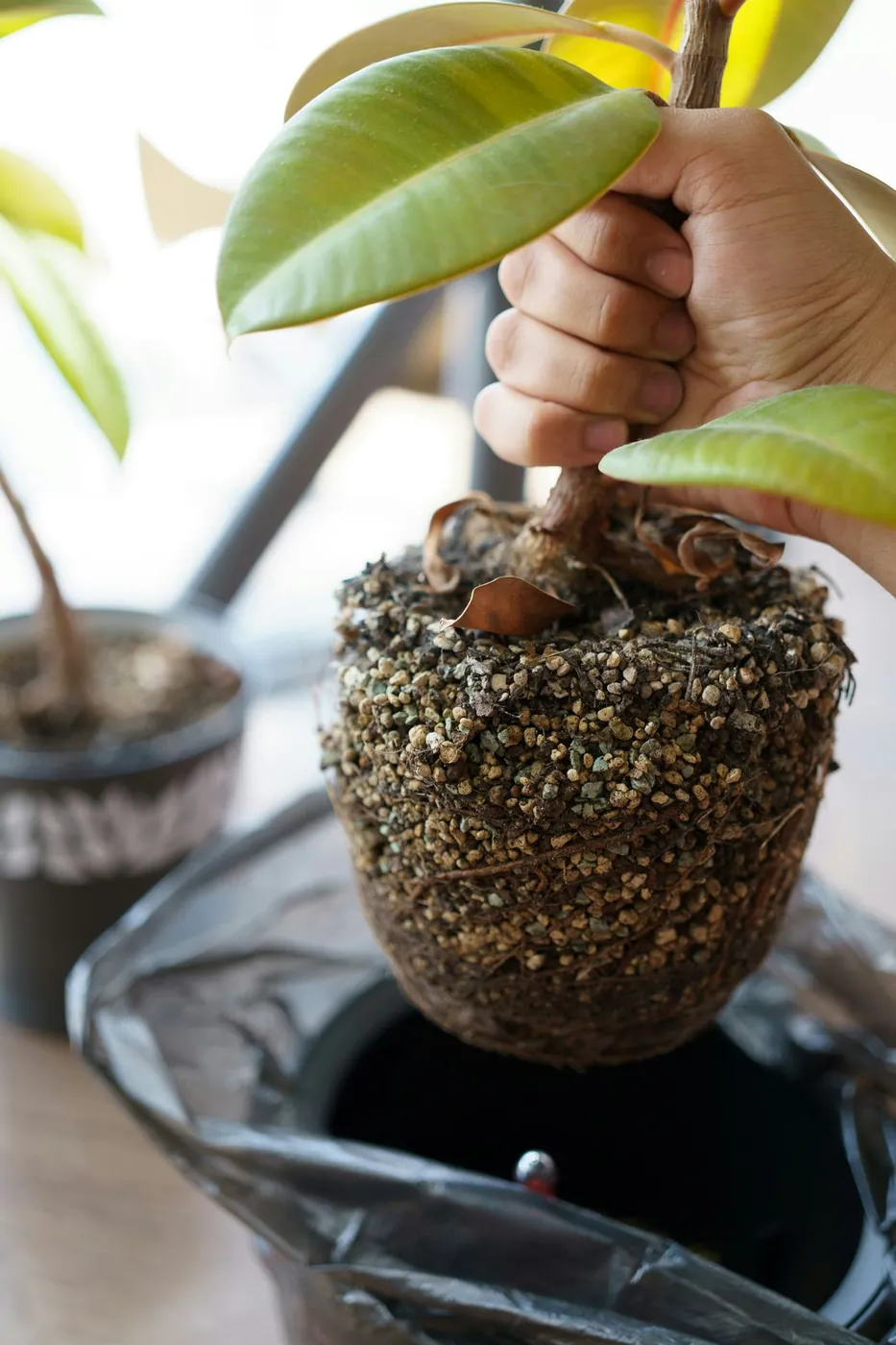
Root rot doesn't happen overnight. It's the end stage of soil staying wet for too long, which starves roots of oxygen, weakens them, and leaves them vulnerable to the fungi that cause the actual rot. That process takes time, which means there's usually a real window to catch it before it's done serious damage, if you know what early root rot looks like rather than waiting for the unmistakable late-stage signs.
What healthy roots look like, for comparison
Worth knowing before anything else: healthy roots are firm and springy, not squishy, and are white, pale tan, or (in some species) black, but firm either way. That firmness is the real test, more than color alone, since a few species naturally have darker roots even when perfectly healthy.
Early signs
This is the stage that's easy to miss, because the plant often still looks mostly fine above the soil:
- Soil that stays wet noticeably longer than usual after watering, even though nothing about your routine changed.
- A slightly musty smell from the pot, subtle at this stage, not yet the unmistakable rotten-egg smell of advanced rot.
- A little less vigor than usual: not dramatic wilting, just growth that's slowed or leaves that seem slightly duller.
- The first roots you can see or feel through drainage holes losing their firmness, even if most of the root system still looks fine.
At this stage, the fix can be as simple as stopping watering, letting the soil dry out well past normal, improving drainage if the pot lacks it, and giving the plant slightly brighter (though still indirect) light to help it use water faster. Full repotting often isn't necessary yet if caught here.
Late signs
By the time these show up, the damage is more serious and repotting is close to unavoidable:
- Yellowing or wilting leaves across the plant, sometimes alongside soft, mushy stems.
- A strong, unmistakable rotten smell from the soil, often compared to sulfur or rotten eggs.
- Roots that are dark brown or black, feel mushy or slimy, and may slough off in your hand when you touch them.
- Wilting even though the soil is clearly still wet, the plant is dying of thirst despite plenty of water, because the roots that would absorb it no longer function.
Treating it once you've confirmed it
- Remove the plant and rinse the roots under lukewarm running water to clear away soil, which may harbor the fungi responsible.
- Prune away every dark, mushy root with sterilized scissors or shears, cutting back into firm, healthy tissue above where the rot ends. Being thorough matters more than being gentle here, leftover rot can spread again.
- Discard the old soil entirely rather than reusing it, and clean the pot if you're keeping it.
- Repot into fresh, well-draining soil, in a pot with drainage holes. Reusing a pot without them just resets the same conditions that caused the problem.
- If very little healthy root remains, consider trimming back some leaves too, so the reduced root system isn't stretched thin trying to support foliage it can no longer keep up with.
Once repotted, water sparingly at first and let the plant recover in bright, indirect light rather than direct sun, which would add more stress on top of an already-weakened root system.