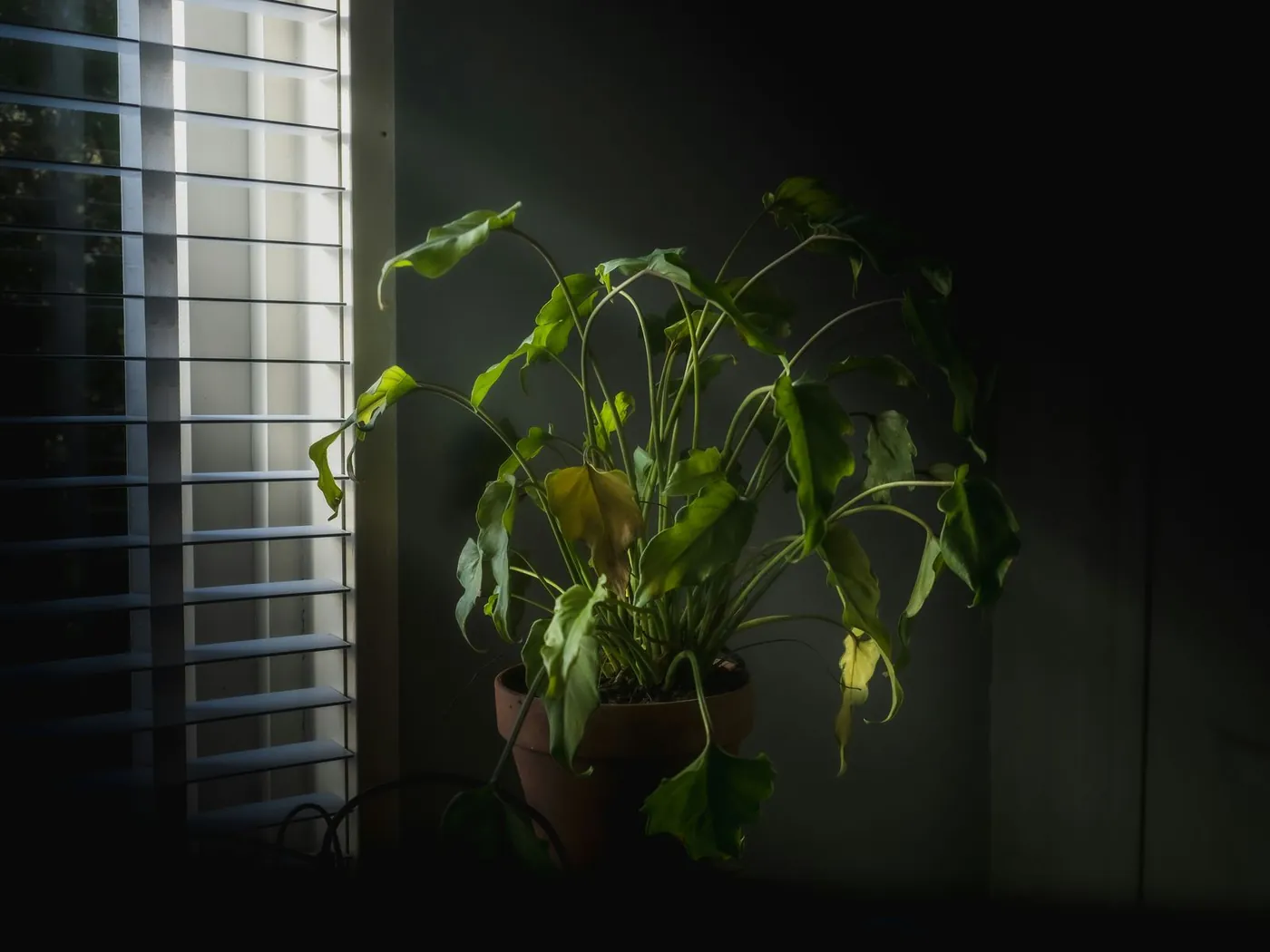
A badly underwatered plant is one of the more fixable houseplant problems, but the obvious response, pouring water on top, doesn't always work the way you'd expect. Soil that's been bone-dry for a long time can actually repel water rather than absorb it, running straight down the inside edge of the pot and out the drainage holes without ever rehydrating the root ball. Knowing this changes how you fix it.
Confirming it's actually underwatering
- Soil that's dry several inches down, sometimes pulling away from the sides of the pot, leaving a visible gap.
- The pot feels distinctly lighter than it should.
- Leaves that are wilted, wrinkled, or curling inward, often with brown, crispy (not soft or mushy) edges.
- Slower-than-usual growth, or new leaves coming in smaller than expected.
One detail worth knowing if you're still unsure: root color is a more reliable tell than soil moisture alone, especially on a plant that's had inconsistent care. Underwatered roots tend to be rusty orange to light brown and still firm, stressed but structurally intact. Overwatered or rotted roots are dark brown to black and mushy or slimy. If you're not sure which problem you're looking at, this is the detail to check.
Why a normal watering sometimes doesn't work
Potting mix that's dried out completely can become hydrophobic, meaning water beads on the surface or runs down the gap between the soil and the pot wall instead of soaking in. If you've watered a badly dried-out plant and it drained through almost immediately, that's very likely what happened, not a sign the plant didn't need water after all.
The fix: bottom watering
- Set the pot (in its plain nursery pot, if it has one) into a basin, sink, or tray of room-temperature water, a few inches deep, enough to reach partway up the sides of the pot without submerging the rim.
- Let it sit for 20 to 30 minutes for a moderately dry plant, or up to a few hours for one that's severely dried out. The soil draws water up from the bottom, which rehydrates compacted, water-repelling mix far more evenly than pouring from the top.
- Lift the pot out and let it drain fully before setting it back in its usual spot or decorative pot. Don't leave it sitting in standing water afterward.
- If the soil still won't absorb water after a soak, the mix itself may need replacing rather than repeated soaking, badly hydrophobic peat-based mixes sometimes reach a point where a fresh repot is faster than trying to rewet the old soil.
What to expect
Mild to moderate underwatering typically shows visible improvement, leaves firming back up, within 24 to 48 hours of a proper watering. If there's been no response after two days, the roots may already be damaged from the dry spell, which is worth checking directly rather than continuing to add water. Leaves that were already fully brown and crispy with no green left generally won't recover, but the rest of the plant often can, even if it looks rough for a couple of weeks while it rebuilds.
Preventing the next one
Checking soil moisture on a regular basis, rather than a strict calendar, is what actually prevents this from repeating. See our watering guide for the finger and chopstick tests that make this quick to check without guessing.