
Repotting isn't something to do on a fixed schedule, and it isn't automatically the fix for a plant that looks unhappy. Sometimes it's exactly what a struggling plant doesn't need. The useful question isn't "has it been a while." It's whether the roots have actually run out of room.
The real signs
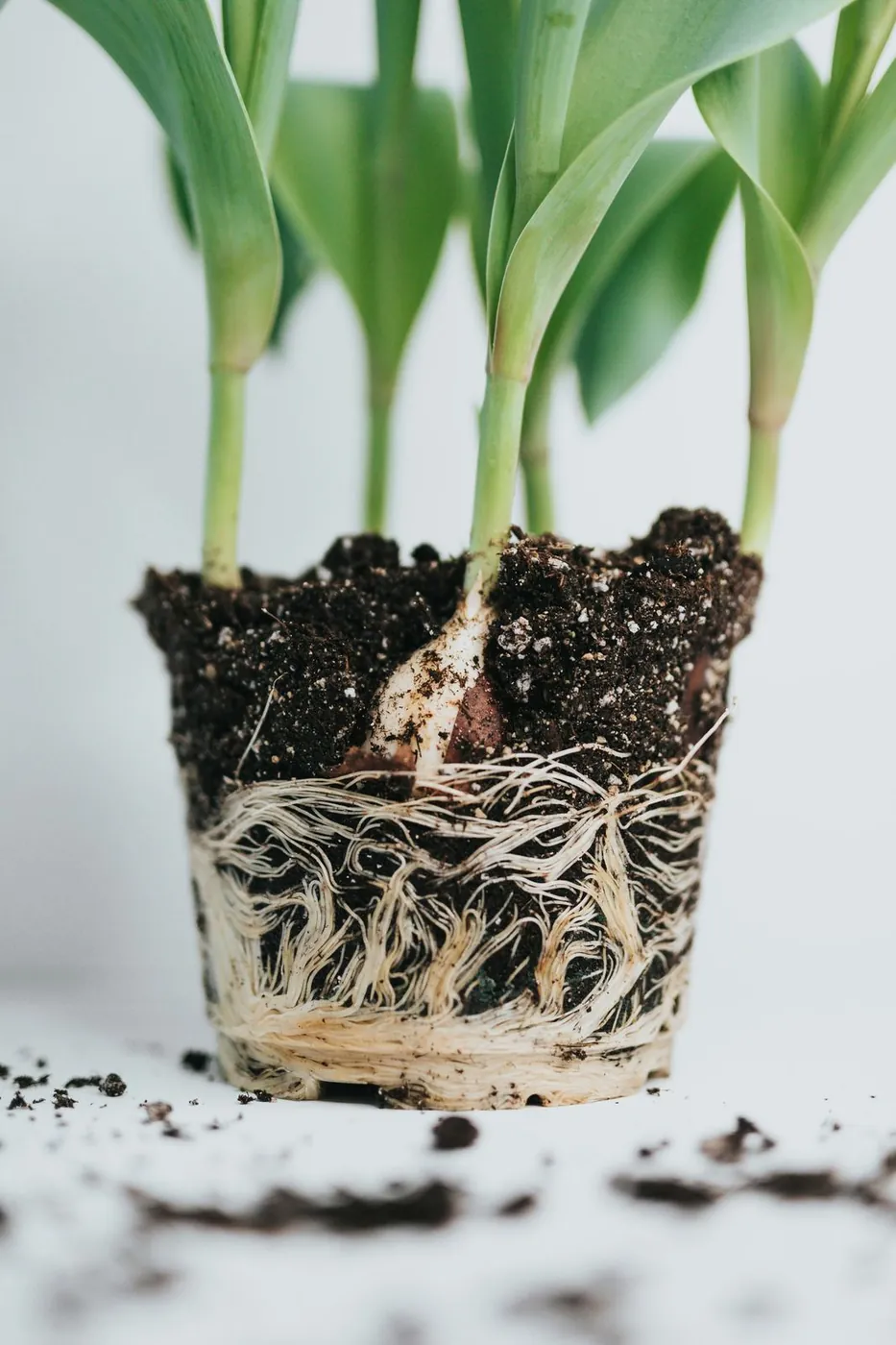
Photo by Nathan Dumlao on Unsplash
- Roots growing out of the drainage holes, or circling visibly at the bottom when you lift the plant slightly.
- Water running straight through and out the bottom almost immediately, rather than being absorbed, a sign the pot has more root than soil left to hold moisture.
- Soil that dries out unusually fast, sometimes within a day or two of a thorough watering.
- Growth that's stalled or slowed despite otherwise good light and care.
- More root than soil visible when the plant is eased out of its pot to check.
The most reliable check is also the most direct one: gently slide the plant out of its pot and look. If the roots are tightly circling the shape of the container with little visible soil left, that's about as clear a signal as this gets.
Sizing the new pot
Bigger isn't better here. A pot only 1 to 2 inches larger in diameter than the current one is the standard move. Sizing up dramatically leaves a large volume of soil with no roots in it yet, which holds excess moisture and raises the risk of root rot before the plant has grown into the space.
Once it's out of the pot
Loosen tightly circling roots gently with your fingers before repotting, so they're encouraged to grow outward into the new soil rather than continuing their old circular pattern. Trim off any roots that are mushy, dark, or clearly dead. Set the plant at the same depth it was growing before. Burying the stem deeper than it was doesn't help, and can encourage rot at the base.
Spring through early fall, while the plant is actively growing, is the best window for this. A plant repotted while dormant has less energy available to recover and establish in the new soil.